We detected that you are browsing from
Choose where you’d like to go:
Explore essential knowledge, engineering insights and practical guides designed to help you get the most from every journey.

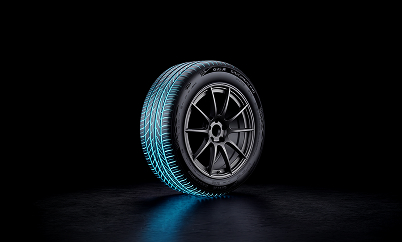
EV tires are often engineered with greater attention to noise because electric powertrains produce much less engine noise, making tire and road noise more noticeable inside the cabin. However, not every EV tire is automatically quieter than every conventional tire. Noise performance depends on tread design, tire construction, materials and, in some applications, acoustic technologies.
In an internal-combustion vehicle, engine and drivetrain sounds can mask some tire noise.
Electric motors operate much more quietly, particularly at lower speeds. As a result, occupants may become more aware of:
• Tire-road interaction
• Tread-pattern noise
• Road-surface noise
• Tire cavity resonance
• Vibration transmitted into the vehicle
Noise therefore becomes an important consideration when engineers develop tires for EVs.
Noise can be addressed through several aspects of tire design:
• Optimized tread patterns can reduce the noise generated as tread blocks interact with the road.
• Tire construction and materials can help control vibration.
• Acoustic technologies can target resonance inside the tire cavity.
Giti has developed GitiSilent, an acoustic tire technology that uses a sound-absorbing layer attached to the tire's inner wall.
The technology is designed to absorb vibrations from road contact and can reduce interior vehicle noise by 2–4 decibels (dB) under specified test conditions.
Noise is also part of Giti's OE development.
For the all-electric BMW iX1 and BMW iX2, the GitiSynergy H3 was developed to provide reduced road noise and enhanced ride comfort, alongside low rolling resistance, handling and durability requirements.
Giti's EV-ready strategy similarly identifies noise and comfort as one of the core areas of EV tire development.
EV tires are not automatically quieter, but controlling tire noise becomes more important in an electric vehicle because there is less powertrain noise to mask it. Giti addresses this through tread and construction optimization, OE development and technologies such as GitiSilent.
 Back To Top


 Back