We detected that you are browsing from
Choose where you’d like to go:
We detected that you are browsing from
Choose where you’d like to go:
Explore essential knowledge, engineering insights and practical guides designed to help you get the most from every journey.
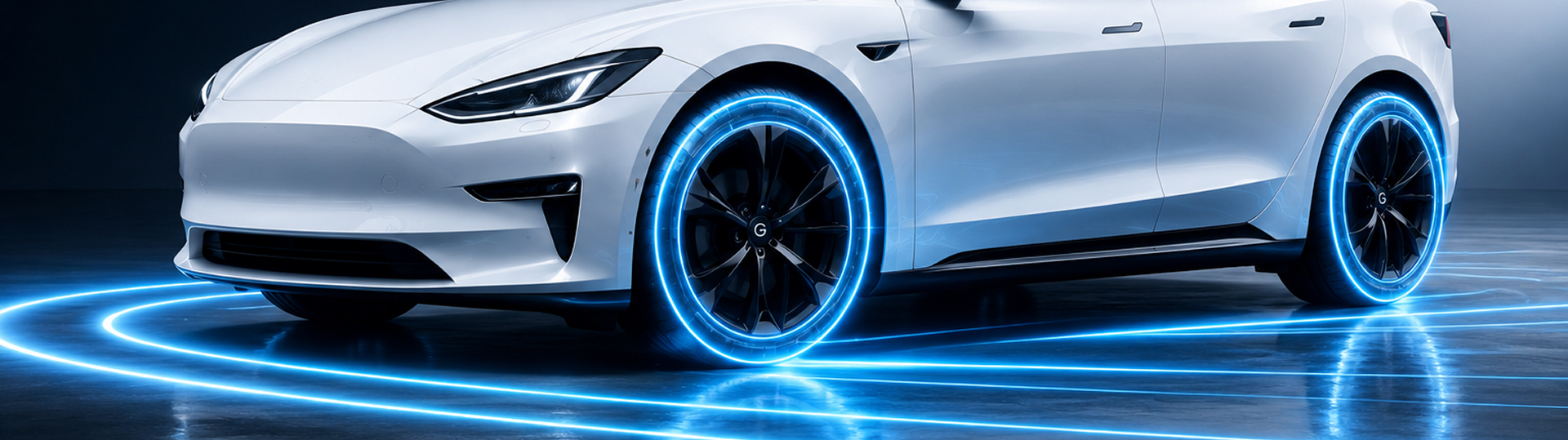
Tires affect EV range primarily through rolling resistance. Lower rolling resistance means that the vehicle requires less energy to keep the tires moving, which can help improve energy efficiency and preserve battery range.
Rolling resistance must not be reduced at the expense of wet braking, handling or tire life. Effective EV tire engineering therefore involves balancing efficiency with safety and durability.
Giti's EV-related engineering includes Rolling Resistance Performance Prediction Technology, Low Rolling Resistance Formula, Low Deformation Profile and Structure Design Technology and Intelligent Precision Vulcanisation Technology. Learn more about Giti AdvanZtech 2.0.
For the BMW iX1 and iX2, Giti engineered the GitiSynergy H3 to achieve the highest EU rolling-resistance label rating of A while meeting BMW Group requirements for handling, noise, wear and sustainability. Read about the BMW iX1 and iX2 OE nomination.
As a tire rolls, its rubber and structural components continually deform as they enter and leave the road contact patch. Some energy is dissipated as heat rather than being used to move the vehicle forward.
For an electric vehicle, reducing this energy loss is particularly important because tire rolling resistance can influence overall vehicle energy consumption and therefore driving range.
However, an EV tire cannot be engineered for low rolling resistance alone. It must balance efficiency with other requirements, including:
• Wet and dry grip
• Braking and handling
• Load-carrying capability
• Durability and tread wear
• Ride comfort and noise
Giti develops low rolling resistance technology through a combination of tire architecture, materials engineering and simulation.
Giti's low rolling resistance technologies include advanced compound formulations using silica and polymers to reduce energy loss while maintaining important characteristics such as wet grip, durability and heat resistance. Tire architecture and structural optimization are also used to reduce deformation and energy dissipation.
A strong example is the GitiSynergy H3 developed for the all-electric BMW iX1 and BMW iX2.
The OE-approved tire achieves the highest EU Rolling Resistance label rating of A while being engineered to meet BMW Group requirements for handling, noise, wear life and sustainability.
EV tire efficiency is not simply about making a tire roll more easily. The engineering challenge is reducing energy loss while retaining the grip, durability, load capability and handling required by the vehicle.

Does Tire Pressure Affect EV Range?
 Back To Top


