We detected that you are browsing from
Choose where you’d like to go:
We detected that you are browsing from
Choose where you’d like to go:
Explore essential knowledge, engineering insights and practical guides designed to help you get the most from every journey.
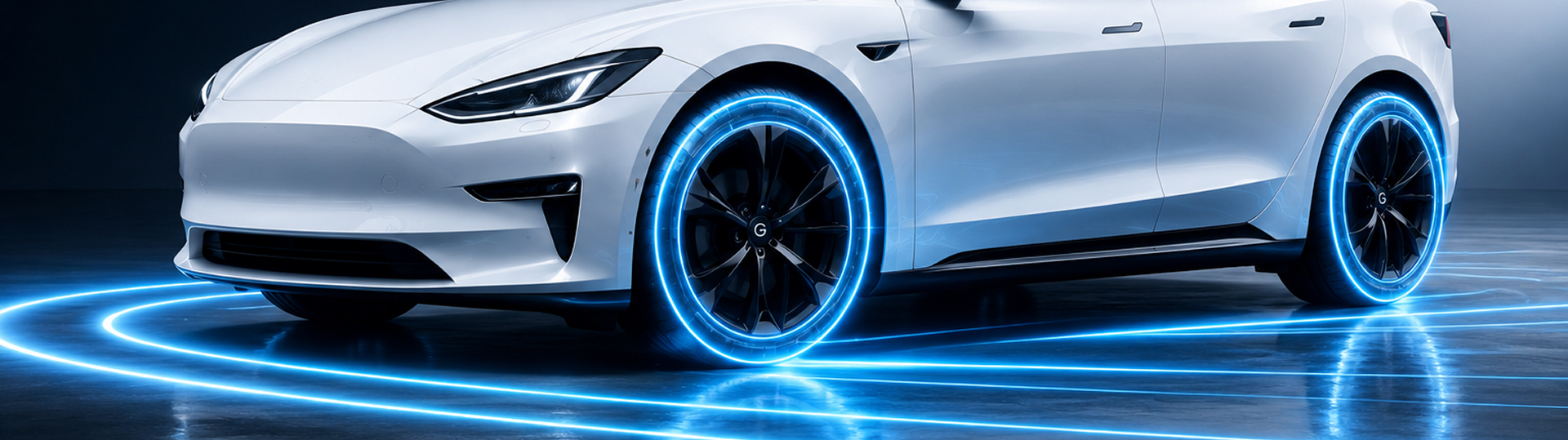
Giti combines computer-based simulation, proving-ground testing and vehicle-manufacturer validation when developing tires for EV applications.
For the BMW iX1 and iX2 project, Giti designed the GitiSynergy H3 at its European R&D Centre in Hannover. Testing took place at Giti's MIRA proving ground in the United Kingdom, followed by additional validation in Germany and Spain.
Giti's AdvanZtech platform also includes rolling-resistance prediction, pattern-noise simulation, structural-noise simulation, energy-optimization simulation and durability-testing technologies. These tools help engineers assess efficiency, comfort, handling, load capability and wear before and during physical vehicle testing. Learn more about Giti's BMW development program and the AdvanZtech engineering platform.
An OE tire program is different from simply supplying an existing tire in the correct size.
Vehicle manufacturers establish performance requirements based on characteristics such as vehicle weight, powertrain, suspension, handling targets, efficiency, noise and intended driving characteristics.
For an EV, engineers may need to address competing requirements such as:
• Battery weight → greater tire load requirements
• Instant torque → increased demand on traction and wear
• Driving range → low rolling resistance
• Quiet powertrain → greater sensitivity to tire and road noise
• Vehicle dynamics → grip, braking and handling requirements
Giti's AdvanZtech platform integrates R&D expertise across its international engineering network. Its development capabilities include compound engineering, tire structure optimization, simulation and physical testing.
A simplified OE development journey looks like this:
1. Vehicle Requirements
2. Tire Concept & Engineering
3. Compound + Structure Development
4. Digital Simulation
5. Prototype Tires
6. Laboratory & Proving-Ground Testing
7. Vehicle Testing & Optimization
8. OEM Validation / Homologation
9. Original Equipment Production
For the BMW iX1/iX2 program, BMW required very low rolling resistance without compromising handling performance.
Giti engineered the GitiSynergy H3 to meet those requirements, followed by testing and validation across multiple European facilities before achieving BMW homologation.
OE tire development is a vehicle-specific engineering process. Giti works with automakers to balance efficiency, safety, handling, comfort and durability rather than optimizing one tire characteristic in isolation.

Can Giti EV-ready tires also be used on petrol or hybrid vehicles?
 Back To Top


