We detected that you are browsing from
Choose where you’d like to go:
We detected that you are browsing from
Choose where you’d like to go:
Explore essential knowledge, engineering insights and practical guides designed to help you get the most from every journey.
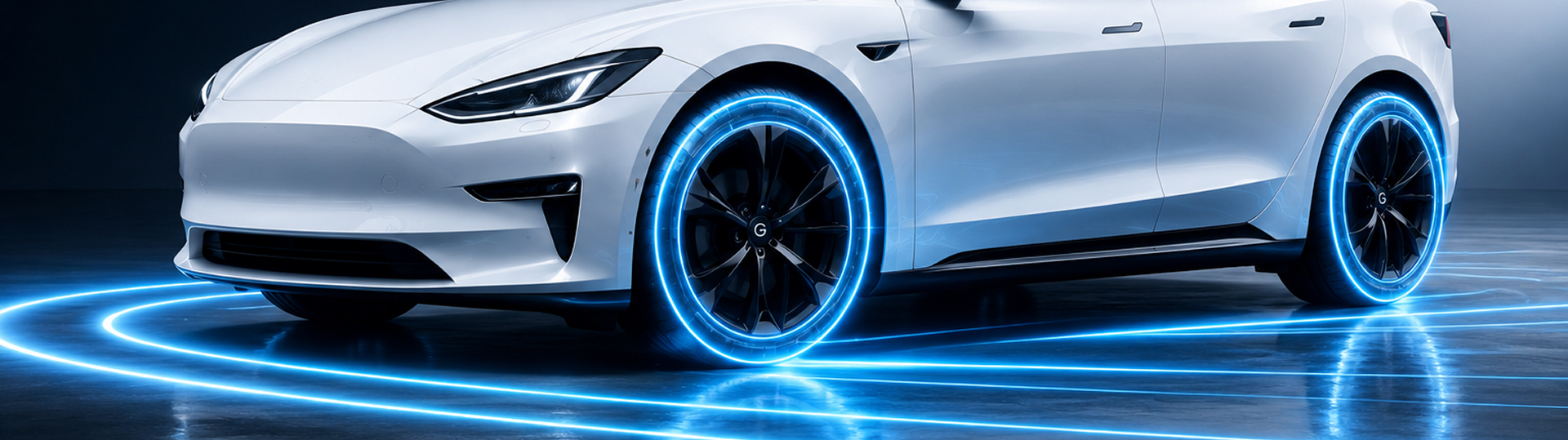
EV tire wear can differ because electric vehicles may combine greater vehicle weight with rapid torque delivery. These factors can increase the forces acting on the tire during acceleration, braking and cornering. However, EVs do not automatically wear out every tire faster. Actual tire life also depends on tire construction, compound, pressure, alignment, driving style and road conditions.
Vehicle weight
The battery pack can make an EV heavier than a comparable internal combustion engine (ICE) vehicle. The tire therefore needs to manage potentially higher loads.
Rapid torque
Electric motors can deliver torque rapidly. Frequent aggressive acceleration can increase stress on the tire's tread.
Tire pressure
Incorrect inflation can alter the tire's contact patch and wear pattern.
Wheel alignment
Incorrect alignment can create uneven tread wear, regardless of powertrain.
Driving behavior
Hard acceleration, braking and cornering can accelerate tire wear.
EV tire development can use reinforced construction, compound engineering, tread design and contact-patch optimization to manage load and wear while retaining grip and efficiency.
For example, Giti's Super Flat Contact technology on the GitiSynergy H2 is designed to increase road contact, reduce tire deformation and reduce shoulder wear.
Giti's broader tire engineering platform also includes high load-bearing technology, high wear-resistance formulas, long-mileage technology and durability testing.
For the BMW iX1 and iX2 program, the GitiSynergy H3 was developed to provide extended wear life while simultaneously achieving very low rolling resistance, reduced noise and the required handling performance.
This shows how durability is balanced against competing EV requirements.
EV tire wear is influenced by vehicle weight, torque, tire pressure, alignment, driving style and tire engineering. A well-engineered EV tire must manage these forces while balancing durability with grip, efficiency and comfort.

What makes a tire suitable for the additional weight of an EV?
 Back To Top


